What Happened to Gernot Reinstadler and How His Accident Changed Skiing Safety Forever
On January 18, 1991, 20-year-old Austrian ski racer Gernot Reinstadler suffered a fatal crash during a qualifying run for the Lauberhorn downhill in Wengen, Switzerland. Approaching the finish line at roughly 75 mph, his right ski caught in a large-mesh safety net. The resulting rotational force caused a massive pelvic fracture and severe internal bleeding. Reinstadler passed away the following day. This tragic event served as a major catalyst for the International Ski Federation (FIS) to mandate strict crash-testing and the implementation of modern, fine-mesh "zero-penetration" safety netting across all Alpine events.
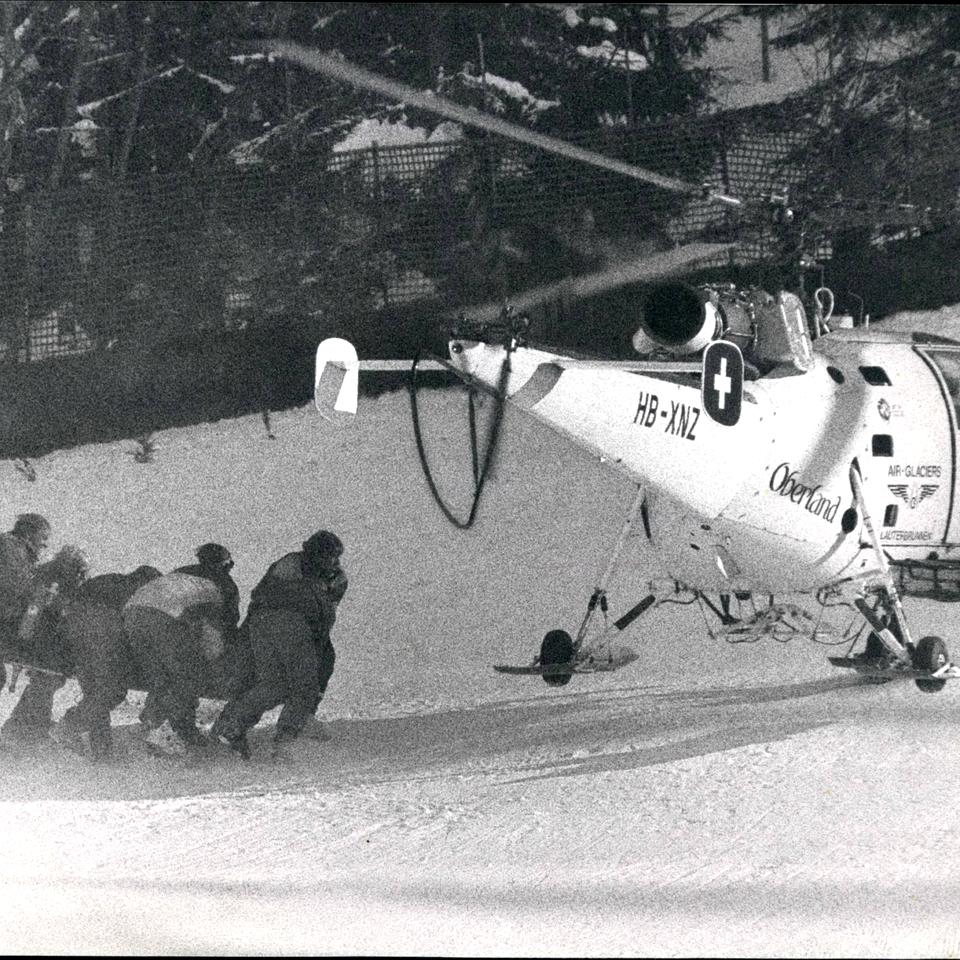
Image source: DIE ZEIT
The Tragic Events of January 18, 1991 at Wengen
The atmosphere at the Lauberhorn in Wengen, Switzerland, is traditionally one of the most electric on the World Cup circuit. Known as the longest downhill race in competitive skiing, the course demands extraordinary endurance and technical precision. On January 18, 1991, the organizers were testing a new format: the first-ever qualifying run for the main downhill event. Among the competitors was Gernot Reinstadler, a 20-year-old rising star from Jerzens, Austria.
Reinstadler was widely regarded as a top prospect for the Austrian national team. The son of Traudl Eder, a former successful ski racer herself, he had skiing in his blood and was eager to prove himself on one of the sport's most demanding stages. As he navigated the grueling 2.5-mile course, his split times indicated a strong performance. However, the true test of the Lauberhorn lies at its very end.
Approaching the final section known as the "Ziel-S" (Finish S), racers typically reach speeds of up to 75 mph (120 km/h). This complex, sweeping turn requires athletes to maintain a tight line while battling severe lactic acid buildup and physical exhaustion. As Reinstadler entered the approach to the Ziel-S, he lost his line slightly. He carried too much speed into a jump, overshooting the ideal landing zone and drifting dangerously close to the course boundaries.
In a fraction of a second, Reinstadler's right ski tip penetrated the large-mesh safety netting lining the course. Because the ski was trapped but his body was still moving forward at highway speeds, his leg acted as a lever. The netting held firm, causing a violent, high-speed rotation of his lower body before his bindings could release. He was thrown back onto the course, sliding across the finish line in full view of thousands of spectators and live television cameras.
Why the 1991 Lauberhorn Accident Was So Severe
To understand the severity of the crash, one must examine the specific physics of the Ziel-S turn and the limitations of early 1990s course design. The Lauberhorn is unique because its most technically demanding section occurs when the athletes are at their most fatigued. After more than two minutes of high-speed, high-G-force skiing, the legs are heavy, and reaction times are naturally delayed.
When Reinstadler's ski caught the net, the kinetic energy transfer was catastrophic. At 75 mph, the human body carries immense forward momentum. When a single point (the right ski) is suddenly anchored to a static object (the safety net), that momentum must be absorbed by the body's joints and skeletal structure. The rotational torque applied to Reinstadler's leg bypassed the knee and transferred directly into his pelvic ring.
The scene at the finish line was deeply traumatic. As Reinstadler slid to a halt, the severity of his injuries became immediately apparent. He left a visible 10-meter (approximately 33-foot) trail of blood on the snow. The thousands of fans gathered in the grandstands fell into a stunned silence as course workers and medical personnel rushed to his aid.
The immediate medical response was swift but faced an almost impossible task. Reinstadler was stabilized as best as possible on the snow before being airlifted by helicopter to a hospital in nearby Interlaken. According to reports from the time, including coverage by the Sunday Times, he underwent a grueling 10-hour surgery. Doctors administered multiple blood transfusions in a desperate attempt to replace the massive volume of blood he was losing internally, but the structural damage to his vascular system was too extensive.
The Medical Reality of a High-Velocity Pelvic Disruption
While news reports frequently summarize Reinstadler's cause of death as a "pelvic fracture," this clinical term often fails to convey the sheer mechanical devastation of the injury. In sports medicine and trauma surgery, the specific injury Reinstadler suffered is known as a high-velocity pelvic ring disruption, commonly referred to as an "Open Book" fracture.
The human pelvis is a ring-like structure of bones held together by dense ligaments. It acts as a protective basin for major blood vessels, including the internal and external iliac arteries and massive venous plexuses. In an "Open Book" fracture, extreme rotational force splits the front of the pelvis (the pubic symphysis) and tears the rear ligaments, literally opening the pelvic ring like a book. When this occurs, the major blood vessels anchored to the bone are sheared apart, leading to massive, rapid internal exsanguination (bleeding out) into the pelvic cavity.
At speeds exceeding 60 mph, the forces involved in Alpine skiing crashes are comparable to severe motorcycle accidents. When Reinstadler's leg was violently rotated by the trapped ski, the leverage tore his pelvis apart. Dr. Paul Gunther, the head physician at the Interlaken hospital who treated Reinstadler, noted at the time that the pelvis was essentially "broken in two."
The Challenge of Field Hemostasis
In 1991, emergency field medicine for severe pelvic trauma was highly limited. Today, trauma responders might use specialized pelvic binders to mechanically close the pelvic ring and apply pressure to internal bleeding sites. However, even with modern interventions, a complete vascular disruption of the iliac arteries in a remote alpine setting carries an exceptionally high mortality rate.
During the 10-hour surgical intervention, the medical team's primary obstacle was achieving hemostasis (stopping the bleeding). Because the venous plexus in the pelvis is a complex web of vessels rather than a single artery that can be easily clamped, the internal bleeding was diffuse and overwhelming. Despite continuous blood transfusions, Reinstadler's body could not maintain sufficient blood pressure to sustain his vital organs. He never regained consciousness and was pronounced dead in the early hours of January 19, 1991.
How the Failure of "A-Nets" Led to Modern Ski Safety
The tragedy at Wengen exposed a fatal flaw in the engineering of Alpine safety barriers. Prior to 1991, the primary goal of course netting was simply to keep a falling skier from leaving the course and hitting trees or rocks. To achieve this, organizers relied heavily on "A-nets"—large, heavy-duty nets with wide mesh openings.
The critical engineering oversight of the A-net was its mesh size. While the net was strong enough to catch a human torso, the holes were large enough for the narrow tip of an Alpine ski to pass through. If a skier slid into the net feet-first or sideways, the ski could penetrate the mesh and become entangled. As the skier's body continued to move down the mountain, the trapped ski acted as an anchor, resulting in the exact rotational torque that killed Reinstadler.
The Shift to Zero-Penetration Liners
Following the accident, the International Ski Federation (FIS) faced immense pressure to overhaul course safety. The immediate solution was the introduction of "B-nets" and "C-nets" equipped with fine-mesh or solid polycarbonate "glide" liners. These liners are designed to be "zero-penetration"—meaning a ski tip cannot pass through them. Instead of catching the skier, the modern net acts as a flexible wall, allowing the skier to slide along its surface while gradually absorbing their kinetic energy.
Furthermore, the FIS fundamentally changed its regulatory approach. Historically, the governing body did not conduct standardized crash tests on course nets, leaving liability largely to the manufacturers and local race organizers. Reinstadler's death catalyzed a shift toward strict, FIS-mandated crash testing for all World Cup barriers, ensuring they could withstand high-speed impacts without allowing entanglement.
| Safety Feature | 1991 Standard (A-Net Era) | Modern Standard (B-Net/Poly Era) | Purpose of Change |
|---|---|---|---|
| Mesh Size | Large (often 10cm+ openings) | Fine-weave or solid liners | Prevent ski-tip and pole penetration. |
| Impact Mechanics | Catch and stop (high deceleration) | Deflect and glide (gradual deceleration) | Reduce sudden G-force trauma to internal organs. |
| Material | Heavy knotted rope/nylon | Polycarbonate sheets / layered fine mesh | Create a smooth surface that prevents snagging. |
| Testing Protocol | Manufacturer liability, limited FIS testing | Strict FIS-mandated crash testing | Ensure uniform safety across all World Cup venues. |
The "Black Period" of Austrian Skiing (1988–1994)
To fully grasp the cultural impact of Gernot Reinstadler's death, it must be viewed within the context of what is often called the "Black Period" of Austrian skiing. In Austria, Alpine skiing is more than a sport; it is a core component of national identity. The Austrian Ski Federation (ÖSV) is a highly scrutinized institution, and its athletes are national heroes.
Between 1988 and 1994, the ÖSV suffered an unprecedented string of tragedies that deeply traumatized the team and the nation. Reinstadler's death was not an isolated incident, but rather the midpoint of a devastating six-year window.
The Austrian team doctor was tragically crushed by a snow groomer following a collision with another skier during the Winter Olympics in Calgary.
Fatal crash during the Lauberhorn downhill qualification in Wengen due to safety net entanglement.
Just months after Reinstadler's death, three-time World Champion Rudolf Nierlich died in a severe car accident in Austria.
The promising Austrian skier died in a free-skiing accident after colliding with a wooden fence.
Two-time World Champion Ulrike Maier suffered a fatal broken neck during a World Cup downhill race in Garmisch-Partenkirchen, Germany, after catching an edge and colliding with a timing post installation.
The Psychological Toll on the ÖSV
This relentless sequence of loss nearly broke the Austrian team. Following the deaths of Reinstadler and Nierlich in 1991, and later Maier in 1994, there were serious discussions within the Austrian media about whether the pursuit of Alpine glory was worth the human cost. The psychological toll on the surviving athletes was immense, forcing a cultural reckoning. The "gladiator" mentality of the 1970s and 80s—where athletes accepted extreme danger as simply part of the job—began to dissolve, replaced by a demand for institutional accountability.
Marc Girardelli and the Athlete-Led Safety Revolution
The visual horror of Reinstadler's crash, broadcast to millions and witnessed firsthand by his peers, sparked immediate outrage among the athletes. For decades, ski racers had largely deferred to the FIS and local organizers regarding course safety. Reinstadler's death changed that dynamic permanently.
Marc Girardelli, a five-time overall World Cup champion and one of the most respected voices in the sport, was highly vocal in the aftermath. According to contemporary reports, Girardelli expressed profound "disgust and fear" regarding the state of the course and the netting. He, along with other veteran racers, recognized that what happened to Reinstadler was not a freak accident of nature, but a failure of engineering that could have happened to any of them.
This collective anger empowered athletes to unionize their voices regarding safety. They began to demand course inspections, the right to veto dangerous jump profiles, and the immediate removal of outdated A-nets. Years later, American Olympic gold medalist Picabo Street echoed this sentiment when discussing Alpine fatalities, noting that if safety protocols and equipment were implemented correctly, many of these deaths would be entirely preventable.
The athlete-led pushback following Wengen 1991 is widely regarded as a major turning point. It forced the FIS to treat athletes as stakeholders in course design rather than just competitors, leading to the creation of dedicated safety committees and the employment of full-time FIS race directors who oversee course preparation.
The Legacy of Gernot Reinstadler in Wengen Today
In the immediate aftermath of the crash, the organizers of the Lauberhorn made the unprecedented decision to cancel the 1991 downhill race, as well as the subsequent slalom event. It remains the only time in the long, storied history of the Wengen races that the event was cancelled due to a competitor's death. This decision underscored the profound shock that reverberated through the skiing community.
Today, Gernot Reinstadler is remembered not just as a catalyst for safety regulations, but as a young man who lost his life pursuing his passion. At the finish area in Wengen, near the Ziel-S where the accident occurred, a memorial plaque stands in his honor. Fans and fellow athletes still pause there to pay their respects during the annual Lauberhorn race weekend.
In recent years, archival photos of Reinstadler, including images from Christmas 1990 just weeks before his death, have circulated in online historical communities like Reddit's r/lastimages. These photographs serve as a poignant reminder of the human element behind the safety statistics. They show a smiling 20-year-old at the beginning of his adult life, reinforcing why the continuous pursuit of safety in Alpine sports remains so critical.
While the sport of downhill skiing will never be entirely free of risk, the modern World Cup circuit is exponentially safer than it was in 1991. The implementation of glide liners, B-nets, and strict crash-testing protocols—all direct results of the Wengen tragedy—have undoubtedly saved countless athletes from suffering a similar fate.
Frequently Asked Questions
Gernot Reinstadler died from massive internal bleeding caused by a severe pelvic fracture. During a crash at 75 mph, his right ski caught in a large-mesh safety net, violently rotating his leg and tearing his pelvic ring apart before his binding could release.
Yes, the video footage of the crash is real. Because the accident occurred during an official World Cup qualifying run, it was captured by live television cameras broadcasting the event. The archival footage is a documented historical record of the tragedy.
The "Ziel-S" (Finish S) is the final, highly technical S-shaped turn on the Lauberhorn downhill course in Wengen, Switzerland. It is notoriously difficult because racers approach it at extreme speeds (up to 75 mph) while suffering from severe physical exhaustion at the end of the 2.5-mile course.
Yes. Reinstadler's death was the primary catalyst for the FIS to phase out large-mesh "A-nets" that allowed ski tips to penetrate and become entangled. They were replaced by modern "B-nets" and polycarbonate liners designed to deflect skiers and prevent penetration.
Following the deaths of Reinstadler in 1991 and Ulrike Maier in 1994, fatal accidents on the World Cup circuit became exceedingly rare due to improved safety standards. However, French skier David Poisson tragically died in 2017 during a downhill training run in Nakiska, Canada, after passing through safety netting and striking a tree.
Final Thoughts
The loss of Gernot Reinstadler remains one of the darkest days in Alpine skiing history, but it also marks the definitive turning point for modern course safety. By forcing the sport to abandon outdated netting and adopt rigorous engineering standards, his tragedy catalyzed changes that protect today's athletes.
- Occurred on January 18, 1991, during the Lauberhorn downhill qualification in Wengen.
- Caused by a right ski tip catching in a large-mesh "A-net" at 75 mph.
- Resulted in a fatal "Open Book" pelvic disruption and massive internal bleeding.
- Catalyzed the mandatory use of fine-mesh "B-nets" and zero-penetration polycarbonate liners.
- Empowered athletes like Marc Girardelli to demand stricter FIS safety regulations.
- Led to the unprecedented cancellation of the 1991 Lauberhorn race out of respect.