Manchester City vs Real Madrid All-Time Stats and Head-to-Head Records
As of mid-2026, the rivalry between Manchester City and Real Madrid stands as one of the most balanced fixtures in European football. In 18 competitive meetings, Real Madrid holds a slight advantage with 7 wins, while Manchester City has secured 6 victories, alongside 5 draws. The goal aggregate is equally tight, with Madrid leading 33 to 31. Notably, the March 2026 Champions League Round of 16 encounter saw a significant shift, as Real Madrid secured their first-ever victory at the Etihad Stadium, winning 2-1 to progress with a 5-1 aggregate score.
How Do the All-Time Head-to-Head Records Compare?
The historical parity between these two giants is a testament to their sustained excellence over the last decade. Since their first modern-era meeting in 2012, the margin for error has remained razor-thin. According to AiScore H2H History, the clubs have traded blows across multiple Champions League campaigns, with neither side able to establish a long-term period of dominance over the other.
While Manchester City has often been the dominant force in domestic league play, Real Madrid has consistently demonstrated a unique resilience in the high-pressure environment of the Champions League knockout stages. This "European DNA" often manifests in Madrid's ability to win matches where they have significantly less possession. The total goal count—33 for Madrid and 31 for City—reflects a rivalry where matches are frequently decided by a single moment of individual brilliance or a tactical adjustment in the final ten minutes.
The context of these goals is also vital. Manchester City’s victories, such as the 4-0 win in May 2023, have often been comprehensive displays of tactical control. Conversely, Real Madrid’s victories frequently involve dramatic comebacks or clinical counter-attacking displays, such as the 2022 semi-final where two late Rodrygo goals shifted the entire trajectory of the competition. This contrast in styles makes the statistical comparison one of the most fascinating studies in modern sports analytics.
What Happened in the Recent 2026 Champions League Meetings?
The 2026 Round of 16 served as a watershed moment for the rivalry. Entering the tie, many analysts viewed Manchester City as slight favorites due to their consistent form in the Premier League. However, Real Madrid produced a performance that signaled a clear shift in European dominance. The aggregate score of 5-1 in favor of the Spanish side was the most decisive margin in their head-to-head history since City's 2023 triumph.
The First Leg: A Tactical Masterclass in Madrid
On March 11, 2026, Real Madrid hosted the first leg at the Santiago Bernabéu. The match ended in a 3-0 victory for the home side, a result that stunned many observers. According to match reports from ESPN, Madrid’s ability to bypass City’s high press was the deciding factor. Kylian Mbappé and Vinícius Jr. exploited the space behind City’s high defensive line, creating high-quality chances that the visitors struggled to contain.
The Second Leg: Breaking the Etihad Curse
The return leg on March 17, 2026, was even more significant. For years, the Etihad Stadium had been a fortress where Real Madrid had never managed to secure a victory. That changed with a 2-1 win for the visitors. While City dominated the ball, Madrid’s defensive structure remained disciplined. This result, tracked by Flashscore, confirmed Madrid's progression and ended one of the longest-standing home-field advantages in the competition.
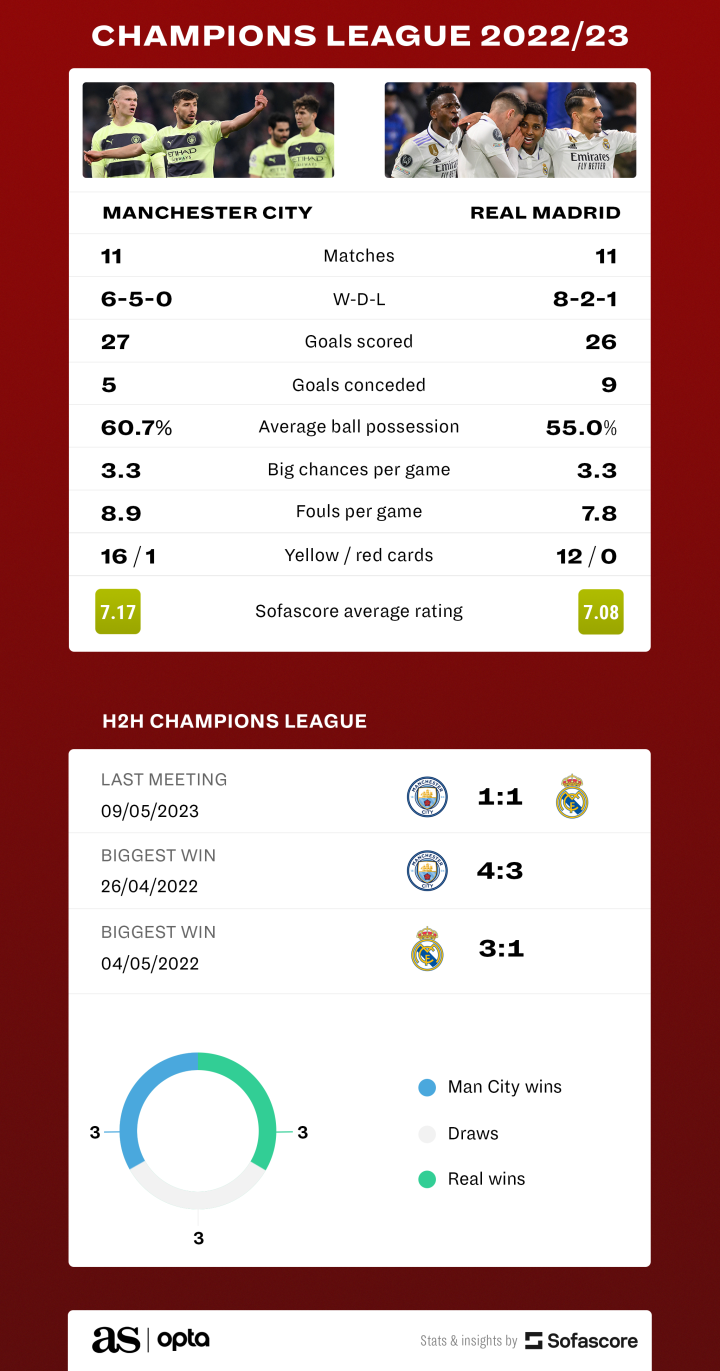
Image source: AS USA - Diario AS
Why Does Manchester City Control the Ball While Real Madrid Wins the Game?
One of the most debated aspects of this fixture is the "Possession Paradox." Manchester City typically maintains between 52% and 60% possession in these encounters. In contrast, Real Madrid is often comfortable with a lower share, ranging from 40% to 48%. However, possession has proven to be a poor predictor of the final scoreline in this specific matchup.
The "Efficiency Gap" was most evident in the March 2026 encounter. Advanced metrics from 365Scores revealed a startling statistic: City won the "Final Third Possession" battle 7 to 0, meaning they spent significantly more time with the ball in dangerous areas. Yet, they lost the match 1-2. This suggests that while City controls the rhythm of the game, Madrid controls the quality of the chances.
| Metric (March 2026) | Manchester City | Real Madrid |
|---|---|---|
| Possession % | 58% | 42% |
| Expected Goals (xG) | 1.95 | 3.14 |
| Expected Goals on Target (xGOT) | 1.94 | 2.48 |
| Big Chances Created | 2 | 6 |
| Final Third Possession Won | 7 | 0 |
The xG (Expected Goals) data further illustrates this point. Madrid’s xG of 3.14 compared to City’s 1.95 shows that the Spanish side is creating fewer but significantly higher-quality opportunities. This clinical nature is a hallmark of the current Madrid squad, which prioritizes verticality and rapid transitions over sustained horizontal passing sequences.
Does Playing at the Etihad Still Give Manchester City an Advantage?
For nearly a decade, the Etihad Stadium was considered a graveyard for visiting European royalty. Manchester City’s unbeaten home streak against Real Madrid was a central pillar of their tactical confidence. However, the events of March 17, 2026, have fundamentally altered this narrative. By securing their first-ever win in Manchester, Real Madrid broke what fans often referred to as the "Etihad Curse."
Community analysis on platforms like Reddit suggests that this shift has impacted how both teams approach the fixture. City players, once seemingly invincible at home, now face the pressure of a broken streak. Meanwhile, Madrid’s rising success rate in Manchester has influenced betting lines and fan expectations, making the "away" leg much less daunting for the Spanish side than it was in the early 2020s.
How Has the Personnel Shifted in the New Era of This Rivalry?
The statistical profile of this rivalry has evolved alongside the players on the pitch. We have transitioned from the era of Sergio Agüero and David Silva vs. Cristiano Ronaldo and Gareth Bale into a new, high-intensity epoch. The integration of younger, more athletic profiles has changed the "micro-stats" of the matches, particularly in terms of sprint speeds and defensive recovery times.
The Impact of Kylian Mbappé
Kylian Mbappé has emerged as a primary "City Killer" in this new era. His 2025 hat trick against the Citizens, as reported by ESPN, remains a benchmark for individual performance in this fixture. His presence forces City’s defensive line to drop deeper, which inadvertently creates more space for Madrid’s midfield to operate, a tactical concession that Pep Guardiola rarely had to make in previous years.
New Tactical Pillars
The personnel shift isn't limited to the attack. Real Madrid’s acquisition of Trent Alexander-Arnold has provided a new dimension of playmaking from the right-back position, while Arda Güler’s technical proficiency in tight spaces offers a counter to City’s pressing traps. On the Manchester side, the integration of Gianluigi Donnarumma in goal and Tijjani Reijnders in midfield represents a move toward a more physically imposing spine, designed specifically to withstand Madrid’s transition-heavy style.
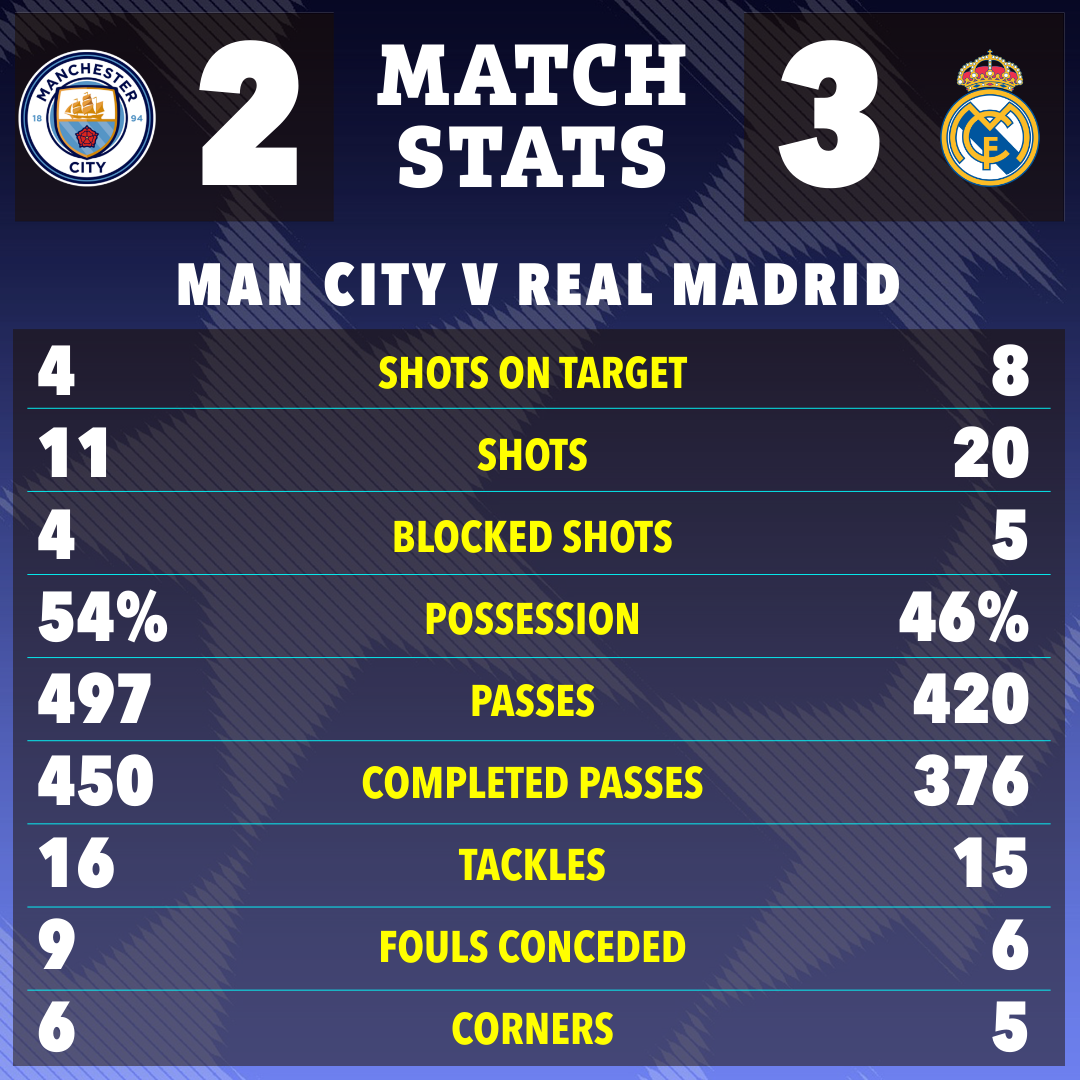
Image source: The Sun
Which Players Have Scored the Most Goals in This Fixture?
Goalscoring records in this fixture are a mix of historical legends and current superstars. Cristiano Ronaldo remains a benchmark with his 105 total Champions League goals, many of which came in high-stakes matches against English opposition. Karim Benzema also left an indelible mark, particularly during the 2022 campaign where his clinical finishing punished City’s defensive lapses.
In the current squads, the scoring burden has shifted. For Real Madrid, Vinícius Jr. and Kylian Mbappé are the primary threats, consistently finding the net in H2H meetings. For Manchester City, Erling Haaland remains the focal point, though his statistical output against Madrid’s low block has been a subject of intense scrutiny. While Haaland maintains a high overall scoring rate, Madrid’s central defenders have often succeeded in limiting his touches inside the box.
- Kylian Mbappé (Real Madrid): Has become the most prolific active scorer in this specific H2H since 2025.
- Vinícius Jr. (Real Madrid): Ranks among the top for goal involvements (goals + assists) in matches against City.
- Bernardo Silva (Man City): Often steps up in this fixture, notably scoring twice in the 4-0 victory in 2023.
- Kevin De Bruyne (Man City): Remains a consistent threat from distance and set-pieces.
Why Real Madrid’s Defensive Micro-Stats Are the Secret to Their Success
While the headlines often focus on Mbappé or Haaland, the true statistical story of the 2026 encounters lies in the defensive "micro-stats." Real Madrid’s ability to absorb pressure is not merely a matter of luck; it is a calculated defensive masterclass. In the March 2026 match, Madrid recorded 23 clearances compared to City’s 8. This high volume of clearances indicates a team that is comfortable defending deep and prioritizing the removal of immediate danger over playing out from the back.
Tackle success rates also tell a compelling story. Madrid achieved a 65% tackle success rate, significantly higher than City’s 40%. This suggests that when Madrid defenders commit to a challenge, they are far more likely to win the ball cleanly. Furthermore, the "dribbled past" metric has become a point of frustration for City fans; in their most recent meeting, City players were dribbled past 11 times, while Madrid’s defenders were bypassed only 5 times. These small margins in defensive efficiency often compensate for City’s higher volume of passes and possession.
Key Takeaways on the World's Premier Club Rivalry
- The 2026 Power Shift: Real Madrid’s 5-1 aggregate victory and first-ever win at the Etihad Stadium have redefined the competitive balance between the two clubs.
- Efficiency Over Possession: Manchester City consistently wins the possession battle (often 55%+), but Real Madrid creates higher-quality chances (higher xG and xGOT).
- The Etihad Fortress Has Fallen: The psychological advantage City once held at home has been neutralized following the March 17, 2026, result.
- Defensive Discipline: Madrid’s superior tackle success rate (65%) and high clearance volume are the foundations of their ability to withstand City’s pressure.
- New Era Personnel: The rivalry is now defined by the impact of Kylian Mbappé and the tactical versatility of players like Trent Alexander-Arnold.
- The Scoring Gap: While City spreads goals across the team, Madrid relies on the clinical efficiency of their front two to outperform their expected goals.
To stay ahead of the next encounter, fans should monitor the xGOT trends and defensive clearance rates, as these metrics have become the most reliable predictors of success in this fixture.
Frequently Asked Questions
- Who has won more games between Man City and Real Madrid?
- As of mid-2026, Real Madrid leads the head-to-head record with 7 wins to Manchester City's 6. There have also been 5 draws in their 18 competitive meetings. This narrow margin reflects the extreme competitiveness of the fixture over the last decade.
- What is the biggest win in Man City vs Real Madrid history?
- The most decisive results include Manchester City’s 4-0 victory at the Etihad in May 2023 and Real Madrid’s 3-0 victory in the first leg of the 2026 Round of 16. These matches highlight how both teams are capable of dominant performances when their tactical plans are executed perfectly.
- When did Real Madrid first win at the Etihad Stadium?
- Real Madrid secured their first-ever victory at the Etihad Stadium on March 17, 2026. They won the match 2-1, which also allowed them to progress to the next round of the Champions League with a 5-1 aggregate score.
- Who is the top scorer in Man City vs Real Madrid matches?
- Historically, Karim Benzema and Cristiano Ronaldo held significant scoring records in this fixture. In the current era, Kylian Mbappé has become the most prolific active scorer, notably aided by his 2025 hat trick and consistent performance in the 2026 knockout stages.
- Why does City have more possession but fewer wins against Madrid recently?
- This is due to the "Efficiency Gap." While City excels at ball retention and final third entries, Real Madrid focuses on high-quality transitions. Stats from 2026 show Madrid creating more "Big Chances" and having a higher xG despite having less of the ball.