How the Victory Formation Works and Why It Changed Football History
Quick Answer: The victory formation is a specific offensive alignment used in American football to safely run out the clock at the end of a game. The quarterback takes the snap and immediately drops to one knee, intentionally ending the play while keeping the game clock running. This strategy minimizes the risk of a fumble or turnover, allowing the winning team to secure the victory without attempting to advance the ball.
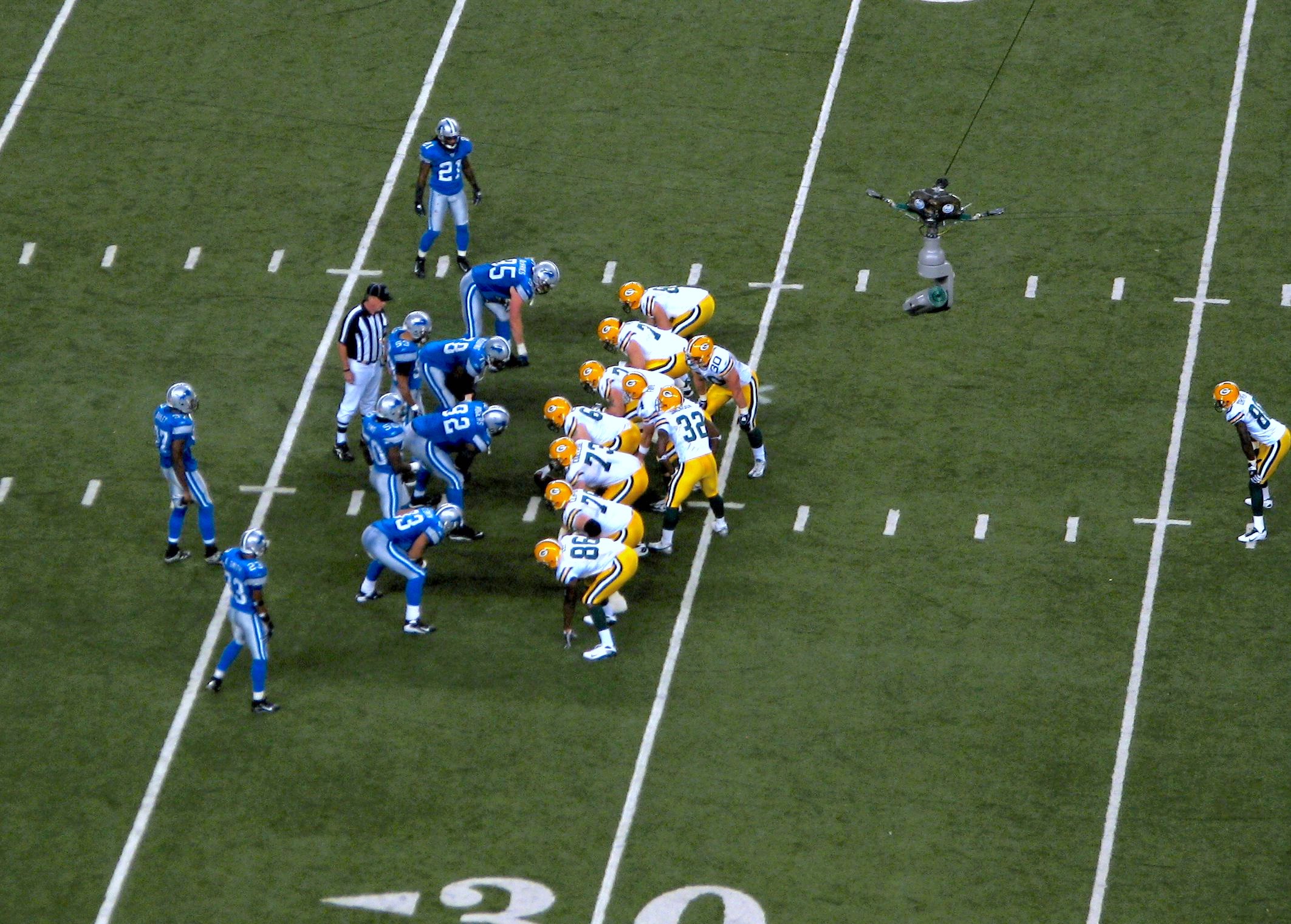
Image source: Wikipedia
In the high-stakes environment of professional and collegiate football, the final two minutes of a game often feature frantic passing, strategic timeouts, and desperate defensive stands. However, when a team holds a lead and the opposing defense has exhausted its ability to stop the clock, the offensive strategy shifts entirely. The goal is no longer to score points or gain yardage, but simply to let time expire safely.
This is where the victory formation comes into play. Widely regarded as the most welcome sight for a winning team and the most agonizing for a losing one, this specialized alignment is designed for one singular purpose: ball security. By understanding the mechanics, the mathematics of the game clock, and the historical blunders that necessitated its creation, fans can gain a deeper appreciation for how games are officially closed out.
What Exactly Is the Victory Formation?
The victory formation is a highly specialized offensive package deployed exclusively when a team intends to execute a quarterback kneel. Unlike standard offensive plays designed to create running lanes or passing windows, every element of this formation is engineered to prevent a turnover.
The physical act of the play is straightforward but strictly regulated by the rulebook. Upon receiving the snap from the center, the quarterback immediately drops to one knee. In the National Football League (NFL) and the National Collegiate Athletic Association (NCAA), the moment the quarterback's knee touches the ground, the ball is officially declared dead by the officials. The play is over, but crucially, the game clock continues to run.
Executing this play comes with a minor statistical cost. Because the quarterback receives the snap and kneels behind the line of scrimmage, each kneel-down typically results in a loss of one to two yards. For a team securing a win, this voluntary surrender of yardage is a negligible price to pay for the guarantee of ball security. The primary objective is to avoid any complex ball-handling—such as handoffs or backward passes—that could result in a fumble, a defensive recovery, and a catastrophic shift in momentum.
In some lower levels of the sport, such as high school football, the rules are even more protective. Referees will often blow the whistle and declare the play dead the moment the quarterback begins the motion of kneeling, rather than waiting for the knee to physically strike the turf. This "intent to kneel" rule is designed to protect the quarterback from unnecessary hits by defensive linemen.
Who Are the Players on the Field During a Kneel-Down?
Because the objective of the play is entirely defensive in nature, the personnel and their alignments differ significantly from a standard offensive setup. The formation is built around the concept of maximum fumble recovery.
- The Offensive Line
- Instead of firing off the ball to drive defenders backward (run blocking) or dropping back to form a pocket (pass blocking), the offensive linemen engage in "gap protection." They align foot-to-foot, creating an impenetrable wall. Their only job is to absorb the initial contact from the defensive line and ensure no defender can shoot through a gap to disrupt the center-quarterback exchange.
- The Two Protectors
- Flanking the quarterback on either side, usually at a depth of two to three yards, are two players known as protectors. These are typically sure-handed running backs or tight ends. If the snap is muffed or fumbled, these two players are positioned to immediately dive on the loose ball before the defense can react.
- The Safety Valve
- The most unique position in the victory formation is the "tailback" spot, located approximately 15 yards deep in the backfield. While this position is traditionally occupied by a running back, teams frequently substitute a defensive player—often a free safety or a highly reliable open-field tackler—into this role. If a catastrophic error occurs, the ball is fumbled, and a defender scoops it up, this safety valve serves as the last line of defense to make a game-saving tackle before the opponent can score.
This precise arrangement ensures that even in a worst-case scenario, the offense has multiple layers of contingency plans to retain possession or stop a defensive touchdown.
The Math of the Kneel and When a Game Is Officially Over
Understanding when a team can safely deploy the victory formation requires a firm grasp of clock management mathematics. The viability of the kneel-down is dictated by three factors: the time remaining on the game clock, the play clock rules of the specific league, and the number of timeouts the opposing defense possesses.
In both the NFL and the NCAA, the offense is allotted 40 seconds on the play clock between standard plays. This 40-second timer begins the moment the previous play is blown dead. Therefore, a team can legally allow up to 39 seconds to tick off the game clock before snapping the ball for the next play.
If a team secures a first down just after the two-minute warning (or the two-minute timeout in college football), and the opposing defense has zero timeouts remaining, the game is statistically over. The offense can take three consecutive kneel-downs, draining approximately 40 seconds per play, to exhaust the remaining 120 seconds without ever needing to gain another yard.
Different professional leagues have implemented varying clock rules that alter this math. For instance, the XFL utilizes a shorter play clock, meaning a team can only kneel out the final 75 seconds of a game. Meanwhile, the UFL's rules allow a team to exhaust 1 minute and 45 seconds via the victory formation.
| Defensive Timeouts Remaining | Time Needed to Kneel Out (3 Downs) | Minimum Yardage Cushion Needed |
|---|---|---|
| 0 Timeouts | ~120 seconds (2:00) | 3-4 yards |
| 1 Timeout | ~80 seconds (1:20) | 3-4 yards |
| 2 Timeouts | ~40 seconds (0:40) | 3-4 yards |
| 3 Timeouts | Cannot kneel out if > 40 seconds remain | N/A (Must run actual plays) |
Note: The "Minimum Yardage Cushion" refers to the space needed behind the line of scrimmage to avoid taking a safety when kneeling near one's own end zone.
Why Does the Victory Formation Exist?
It may seem obvious today that a team should simply kneel to run out the clock, but this was not always standard practice. For decades, teams would run standard rushing plays—often simple dives up the middle—to exhaust the final seconds of a game. This practice continued until a single, disastrous play fundamentally altered football strategy.
The catalyst for the modern victory formation occurred on November 19, 1978, in a game that has been immortalized as the "Miracle at the Meadowlands." The New York Giants were leading the Philadelphia Eagles 17-12. With only 31 seconds remaining in the game and the Eagles completely out of timeouts, the Giants had possession of the ball on third down.
Instead of having the quarterback fall on the ball, the Giants' offensive coordinator called for a running play, designated as "Pro 65 Up." Quarterback Joe Pisarcik took the snap and attempted to hand the ball off to fullback Larry Csonka. The exchange was botched. The ball hit Csonka's hip and bounced onto the artificial turf.
Eagles cornerback Herman Edwards, who had been rushing the play in a desperate attempt to force a turnover, scooped up the loose ball and returned it 26 yards for a game-winning touchdown. The Eagles won 19-17 in one of the most shocking finishes in sports history.
The fallout from the "Miracle at the Meadowlands" was immediate and league-wide. Within one week of the disaster, almost every coaching staff in professional football had designed and implemented a formal, highly protected kneel-down protocol to ensure such a tragedy never happened to them. Joe Pisarcik, the quarterback involved in the play, would later go on to serve as the CEO of the NFL Alumni Association, but his name remains forever linked to the creation of the victory formation.
The Unwritten Rules and Controversies of the QB Kneel
While the victory formation is designed to be a peaceful conclusion to a hard-fought game, it is frequently the center of debate regarding sportsmanship and the "unwritten rules" of football.
A long-standing gentleman's agreement exists between opposing teams during a kneel-down. The expectation is that the offensive linemen will simply hold their ground, and the defensive linemen will stand up rather than aggressively bull-rushing the line of scrimmage. This mutual de-escalation is intended to prevent unnecessary injuries on a play where the outcome of the game is already decided.
However, this unwritten rule is not universally respected. Some coaches argue that the game is not over until the clock reads zero, and defenses should play to the whistle. A notable example occurred when Greg Schiano was the head coach of the Tampa Bay Buccaneers. Schiano routinely instructed his defensive line to aggressively rush the victory formation, attempting to force a fumble. This tactic sparked heated confrontations with opposing coaches, who viewed the strategy as dangerous and unsportsmanlike, while Schiano defended it as playing through the final whistle.
The "Fake" Victory Formation
An even more controversial scenario arises when an offense aligns in the victory formation but executes a live play instead of kneeling. Because the defense is expecting a passive play and often stands up without engaging, running a play from this formation is widely viewed as a severe breach of football ethics.
A highly publicized instance of this occurred during the final week of the 2024 NFL regular season in a game between the New Orleans Saints and the Atlanta Falcons. The Saints were leading comfortably and aligned in the victory formation near the Falcons' goal line. Head Coach Dennis Allen had called for a kneel-down to end the game.
However, the players on the field overrode the coach's call. Quarterback Jameis Winston handed the ball off to running back Jamaal Williams, who scored a touchdown against a completely unprepared Falcons defense. The play caused immediate outrage. Falcons Head Coach Arthur Smith confronted Dennis Allen at midfield, and Allen later issued a public apology to the Falcons organization.
When questioned about the incident, Winston explained that it was a "team decision" made by the players in the huddle. They wanted to ensure Williams, who had led the league in rushing touchdowns the previous year but had zero on the current season, got into the end zone. While Winston framed it as a team-first gesture for a beloved teammate, opponents and analysts widely criticized it as a massive sign of disrespect to the unwritten rules of the game.
How the Victory Formation Affects Quarterback Statistics
An often-overlooked aspect of the victory formation is its negative impact on individual player statistics. Under current NFL scoring rules, a quarterback kneel is officially recorded as a rushing attempt resulting in negative yardage.
Over the course of a long, successful career, these negative yards can accumulate significantly. A quarterback who wins 150 games in their career might execute 300 kneel-downs, resulting in a loss of 300 to 400 career rushing yards. For highly mobile quarterbacks whose rushing statistics are a key part of their legacy, this voluntary surrender of yardage can artificially deflate their career averages.
This statistical quirk has led to calls for rule changes. Veteran NFL coach Bill Musgrave has been a vocal advocate for reclassifying the kneel-down. Musgrave argues that the play should be recorded as a "team stat" rather than an individual rushing attempt charged to the quarterback. He compares the kneel-down to a sacrifice bunt in baseball—a strategic move made for the benefit of the team that does not negatively impact the batter's individual batting average.
Despite these arguments, the league's competition committee has thus far maintained the traditional scoring method, meaning winning quarterbacks will continue to see their rushing totals slightly diminished with every victory.
Common Risks and Edge Cases in the Victory Formation
While the formation is designed to be foolproof, edge cases and rare blunders do occur, requiring teams to remain vigilant even in the final seconds.
The Safety Risk
If a team is backed up against their own end zone, executing a kneel-down becomes mathematically dangerous. Because each kneel results in a loss of one to two yards, taking three consecutive knees requires a cushion of at least four to six yards. If a quarterback kneels and the ball is downed inside their own end zone, it results in a safety, awarding the opposing team two points and forcing the offense to kick the ball away. Teams operating inside their own five-yard line must often run standard plays to gain breathing room before they can safely kneel.
The Muffed Snap
The most catastrophic risk is a fumbled exchange between the center and the quarterback. While rare at the professional level, high school and college games occasionally feature botched snaps during the victory formation. This is precisely why the "protectors" are positioned in the backfield—to immediately fall on any loose ball before the defense can react.
Field Storming
In certain scenarios, particularly in college football or high-stakes NFL playoff games, fans or sideline personnel may begin to storm the field when the clock drops below 40 seconds, knowing the defense has no timeouts and the game is effectively over. Officials are generally lenient in these moments, allowing the clock to run out rather than penalizing the home team for a field invasion, provided the offense has already executed the final necessary kneel-down.
Frequently Asked Questions
How many timeouts does a defense need to stop a victory formation?
If there is more than one minute and twenty seconds (1:20) remaining on the clock, a defense typically needs all three timeouts to force the offense to run actual plays. If the defense has zero timeouts, the offense can run off approximately 120 seconds (two minutes) using three consecutive kneel-downs.
Why do teams put a defensive player in the offensive backfield during a kneel-down?
The player lined up 15 yards deep is known as the "safety valve." Teams often use a defensive player, such as a free safety, in this role because their primary job is to make an open-field tackle if the snap is fumbled and a defender recovers it. Defensive backs are generally the most reliable open-field tacklers on the roster.
Can the defense legally hit the quarterback during a kneel-down?
In the NFL and NCAA, the play is officially dead the moment the quarterback's knee touches the ground. Any hit delivered after the knee is down is considered a late hit and will result in an unnecessary roughness penalty. However, defenders are legally allowed to rush the line of scrimmage before the knee touches, though an "unwritten rule" of sportsmanship usually discourages this.
Has a team ever lost a game while in the victory formation?
Yes. The most famous instance is the 1978 "Miracle at the Meadowlands," where the Giants attempted a running play instead of a kneel-down and fumbled, losing the game. While rare today, botched snaps during kneel-downs have occasionally led to stunning losses in high school and college football.
Is there a book or movie called "Victory Formation"?
Yes. Aside from the football strategy, "Victory Formation" is also the title of a popular contemporary romance novel and a serialized web drama on platforms like Galatea. Users searching for the drama are looking for the fictional story, which uses the football term metaphorically.
Final Thoughts
The victory formation stands out as a fundamental shift in late-game strategy, transforming the chaotic final seconds of a football game into a controlled, mathematical conclusion. Born out of historical blunders, it remains a critical component of clock management.
- Originates from the 1978 "Miracle at the Meadowlands" fumble.
- Requires specific personnel, including gap-blocking linemen and a deep "safety valve" tackler.
- Drains approximately 40 seconds per play off the game clock in the NFL and NCAA.
- Reduces a quarterback's individual rushing statistics due to the voluntary loss of yardage.
- Relies heavily on an unwritten rule of sportsmanship, which is occasionally broken by aggressive defenses or rogue offenses.