Best NHL Picks Today and Expert Betting Predictions for Every Game
Finding value in today's NHL slate requires looking beyond the standard moneyline. Our data models indicate that the most favorable odds currently sit in the 60-minute regulation markets and specific puck line spreads where public perception differs from sharp money movement.
Actionable Insight: Before placing any wagers today, verify starting goaltenders. A shift from a confirmed starter to a backup can alter a game's total by up to 0.5 goals and shift the moneyline implied probability by 4-6%.
Navigating the daily NHL betting landscape requires a systematic approach. With 32 teams playing a grueling 82-game schedule, the sheer volume of data can overwhelm casual bettors. Professional handicappers do not rely on gut feelings; they utilize mathematical models, situational fatigue analysis, and real-time line movement tracking to identify value gaps in the sportsbooks' pricing.
This comprehensive breakdown will equip you with the analytical frameworks necessary to evaluate today's matchups. We will explore how to leverage starting goalie confirmations, why the three-way regulation line often provides superior returns compared to traditional moneylines, and how to spot schedule-induced fatigue before the puck drops.
Which NHL Games Offer Strong Value Today?
The foundation of any successful hockey betting strategy begins with understanding the three primary markets: the Moneyline, the Puck Line, and the Over/Under Total. According to industry data from Pickswise's NHL predictions, these core markets account for the vast majority of daily betting volume. However, volume does not always equate to value. Finding an edge requires comparing the implied probability of the sportsbook's odds against your own predictive models.
Moneyline Picks and Outright Winners
The two-way moneyline is the most straightforward wager in hockey: you are simply picking which team will win the game, inclusive of overtime and the shootout. Because hockey is a high-variance sport where a hot goaltender can steal a game against a vastly superior opponent, betting heavy moneyline favorites (e.g., -250 or shorter) is generally considered a long-term losing proposition. To break even on a -250 favorite, that team must win over 71.4% of the time.
Instead, sharp bettors look for "live underdogs" priced between +120 and +150. In these scenarios, the underdog only needs to win roughly 40% to 45% of the time to generate a positive expected value (EV). Identifying these spots often involves finding home underdogs facing a road team playing their backup goaltender.
Puck Line Predictions and Spread Analysis
The puck line is hockey's version of the point spread, universally set at +/- 1.5 goals. Betting the favorite on the puck line (-1.5) means they must win by two or more goals, while betting the underdog (+1.5) means they can either win the game outright or lose by exactly one goal.
The puck line serves as the great equalizer. A heavy moneyline favorite at -200 might be priced at +130 on the -1.5 puck line. This flip from negative to positive odds is tempting, but it carries significant risk. Empty-net goals in the final two minutes of regulation are the primary driver of puck line covers. If a team is leading by one goal late in the third period, the opposing team will pull their goalie, creating a high-probability scenario for the favorite to secure that crucial second goal and cover the -1.5 spread.
Over Under Totals and Scoring Trends
The Over/Under market requires predicting the combined score of both teams. As noted by Covers' NHL matchup data, the modern NHL scoring average hovers around 5.5 to 6.0 goals per game. Consequently, most sportsbooks set their daily totals at 5.5, 6.0, or 6.5.
When evaluating totals, it is crucial to look beyond season-long averages. A team might average 3.2 goals per game over the season, but if their top-line center and primary power-play quarterback are sidelined with injuries, their projected offensive output for tonight's specific matchup drops significantly. Furthermore, referee assignments and special teams matchups (e.g., a top-tier power play facing a bottom-tier penalty kill) heavily influence the likelihood of a game going over the total.
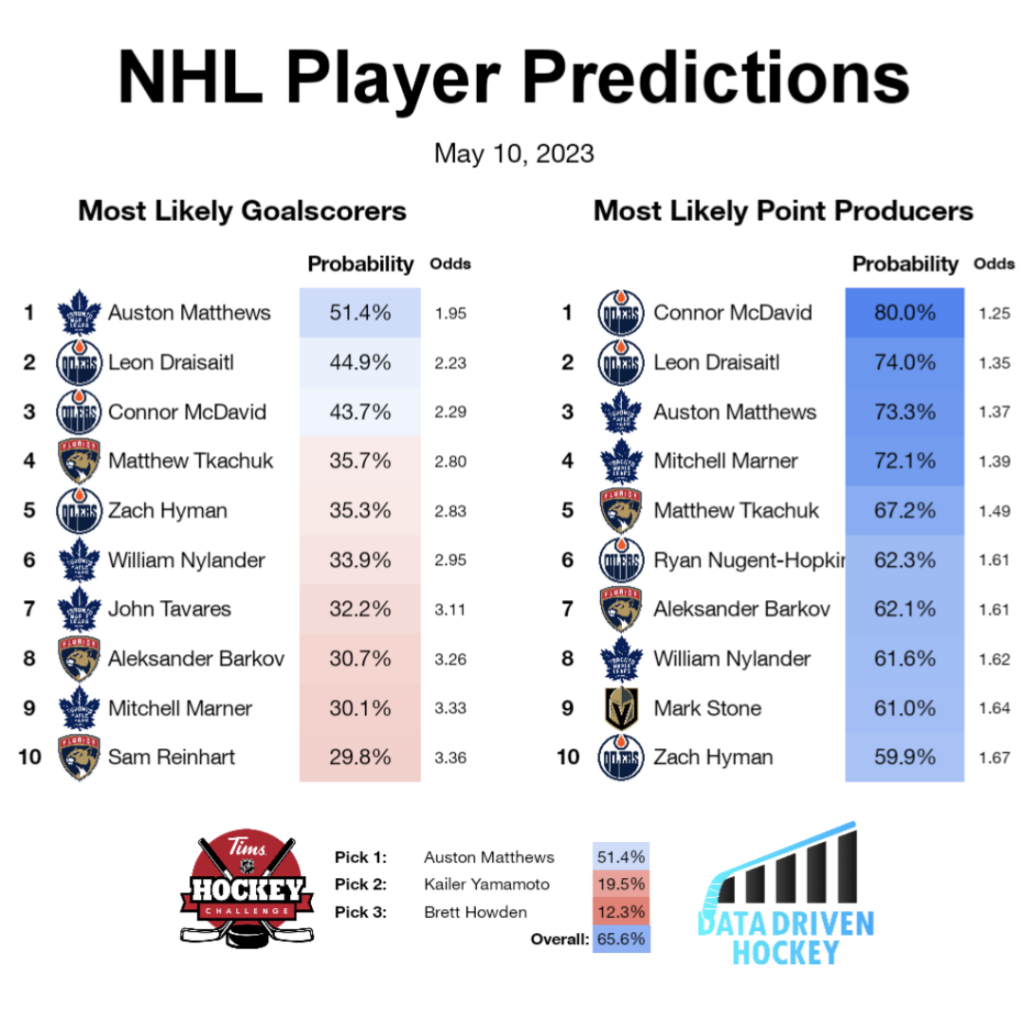
Image source: Inside The Rink
How Starting Goalie Confirmations Change Today's Betting Lines
In the NHL, no single player impacts the betting line more than the starting goaltender. While an NFL team might see a massive line shift if their starting quarterback is ruled out, the NHL sees daily, routine line movement based purely on the rotation of starting and backup goalies. Placing a wager before goalies are confirmed is a common pitfall that exposes bettors to unnecessary negative line value.
Why You Should Wait for the Morning Skate Reports
NHL teams typically hold a "morning skate" at roughly 10:30 AM or 11:00 AM local time on game days. This is when beat reporters observe which goaltender leaves the ice first—the universal indicator of who will start that night. OddsTrader's NHL odds analysis highlights that sportsbooks will often "circle" a game or limit betting action until these morning skate reports are finalized.
If you bet a team at -130 assuming their Vezina-caliber starter is playing, and the team unexpectedly announces a minor-league call-up will start instead, that line might immediately shift to -110 or even move the team to underdog status. You are now holding a ticket with significantly worse expected value than the current market price.
How Backup Goalies Impact the Over Under Total
The drop-off from a starting goaltender to a backup does not just affect the moneyline; it has a profound impact on the game total. When two elite starting goaltenders face off, the total is frequently set at 5.5 with the "Under" heavily juiced (e.g., -120). If one team announces a backup, the total might shift to a flat 6.0. If both teams start backups—often seen on the second night of back-to-back games—the total can climb to 6.5 or even 7.0.
| Matchup Scenario | Typical Total Line | Implied Game Script |
|---|---|---|
| Elite Starter vs. Elite Starter | 5.5 (Under -115) | Low-event, defensive structure, tight checking. |
| Average Starter vs. Backup | 6.0 (Standard) | Moderate scoring, potential for one-sided blowout. |
| Backup vs. Backup | 6.5 (Over -110) | High-event, defensive fatigue, frequent power-play conversions. |
Why the 60-Minute Line Might Outperform the Moneyline
One of the most effective strategies utilized by professional hockey bettors is transitioning away from the traditional two-way moneyline and embracing the three-way regulation line (also known as the 60-minute line). SportsMemo's hockey betting strategy guide emphasizes that understanding the distinction between these two markets is crucial for long-term bankroll growth.
Getting Better Odds on Heavy Favorites
The three-way line offers three distinct betting options: Team A to win in regulation, Team B to win in regulation, or a Tie at the end of 60 minutes. Because you are removing the safety net of overtime and the shootout, the odds for either team to win are significantly more favorable than their two-way moneyline counterparts.
Consider a scenario where the Colorado Avalanche are heavy home favorites against a struggling opponent. The two-way moneyline might price Colorado at -220. Betting $220 to win $100 is a steep price that requires a massive win probability to justify. However, on the 60-minute line, Colorado might be priced at -135. You are now risking substantially less capital, with the only caveat being that Colorado must secure the victory before the final horn sounds in the third period. For dominant puck-possession teams, this is a highly effective way to reduce juice.
When to Bet the Three-Way Regulation Tie
The "Tie" option on the 60-minute line is an often-overlooked market that typically pays out at lucrative odds, generally ranging from +300 to +350. Betting the tie is essentially predicting that the game will go to overtime. This strategy is highly viable when evaluating matchups between two defensively sound teams with elite penalty kills and low-scoring tendencies.
When two evenly matched teams prioritize defensive structure over offensive risk-taking, the likelihood of a 2-2 or 3-3 deadlock at the end of regulation increases dramatically. Late in the third period of a tied game, both teams often adopt a conservative "play for the point" mentality, minimizing risks to ensure they secure at least one point in the standings before heading to the 3-on-3 overtime period.
Spotting the Schedule Loss and Travel Fatigue Factors
The NHL schedule is notoriously unforgiving. Unlike the NFL, where teams have a full week to recover, NHL teams frequently play multiple games in compressed timeframes, often involving late-night flights across multiple time zones. Identifying these situational fatigue spots is a cornerstone of predictive modeling.
Betting Against Teams on the Second Half of a Back-to-Back
The "back-to-back" is the most common fatigue indicator in hockey. When a team plays on consecutive nights, several negative variables compound. First, the team is almost certainly starting their backup goaltender. Second, the skaters are operating on reduced rest, leading to slower reaction times and heavier legs in the third period. Third, if travel was involved between the two games, the team's circadian rhythms and standard game-day routines are disrupted.
However, not all back-to-backs are created equal. A team playing a back-to-back at home (e.g., hosting a game on Friday and another on Saturday) faces significantly less fatigue than a team playing in New York on Friday night and flying to Boston for a Saturday night puck drop. Always factor the travel distance into your evaluation.
The Impact of Three Games in Four Nights on Scoring
An even more extreme fatigue scenario is the "three games in four nights" stretch. OddsTrader's betting insights frequently point to these schedule crunches as prime opportunities to target the Over. When skaters are deeply fatigued, offensive creativity doesn't necessarily disappear, but defensive responsibility certainly does.
Tired players take shorter shifts, lose foot races to loose pucks, and are more prone to taking lazy hooking or tripping penalties when they get beat off the rush. This increase in penalty minutes leads to more power-play opportunities for the rested opposition, driving up the expected goal total for the game.
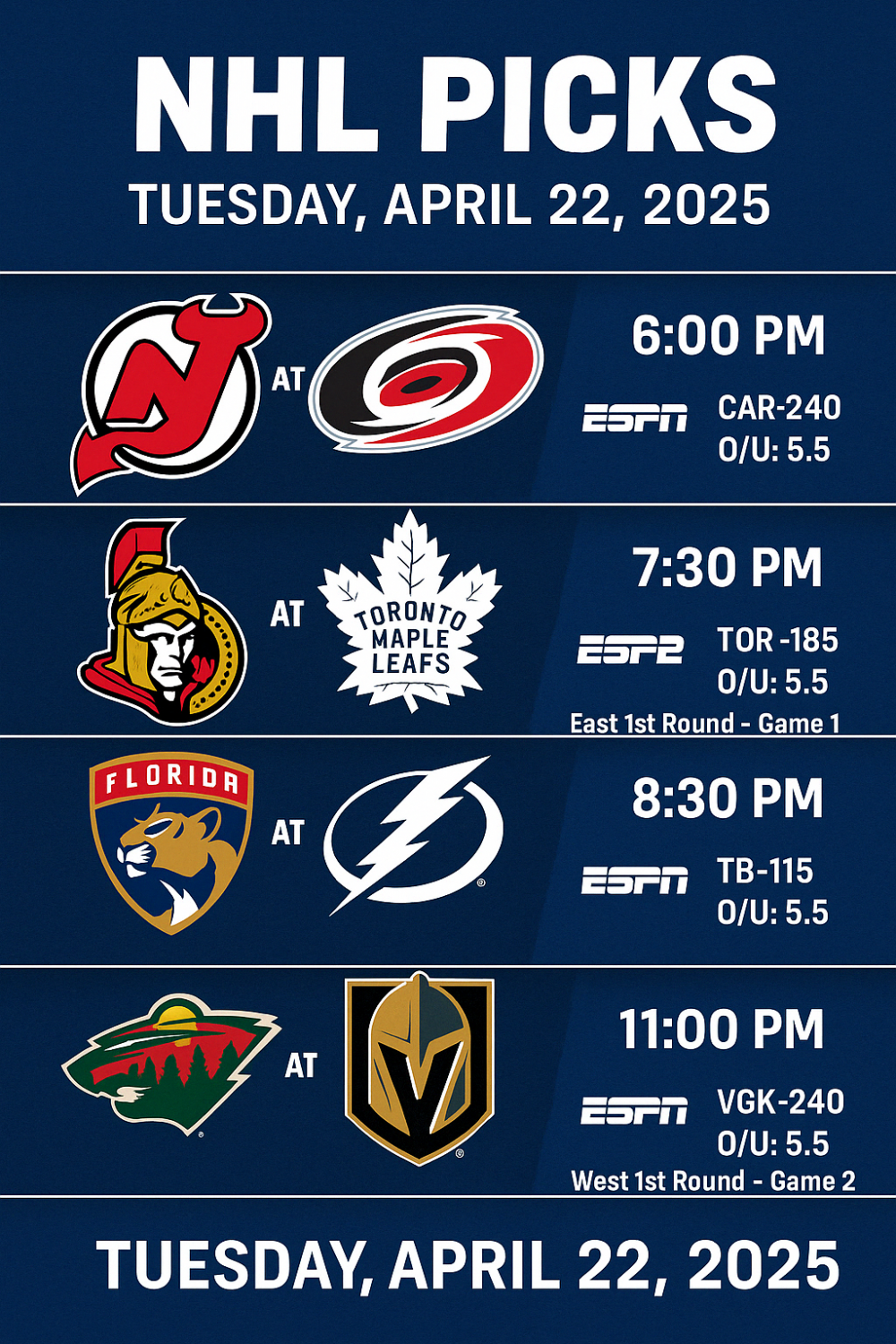
Image source: Kingpin.pro
How to Follow the Sharp Money and Avoid Public Traps
Understanding where the money is flowing is a critical component of modern sports betting. Sportsbooks adjust their lines not just based on injuries or goalie news, but based on their liability. If 90% of the money is wagered on Team A, the sportsbook will adjust the odds to make Team B more attractive, attempting to balance their books.
What Reverse Line Movement Tells Us About the Pros
Reverse Line Movement (RLM) occurs when the betting line moves in the opposite direction of the betting percentages. For example, imagine the Boston Bruins open as -150 favorites against the Montreal Canadiens. Throughout the day, public betting data shows that 80% of the tickets are being placed on Boston. Logically, the sportsbook should move the line to -160 or -170 to deter more Boston bets.
However, if you check the odds and see that Boston has dropped to -135, you have spotted Reverse Line Movement. This indicates that while the *public* is placing a high volume of small bets on Boston, professional bettors (the "sharps") are placing massive, high-dollar wagers on Montreal. The sportsbook respects the sharp money more than the public ticket count, and adjusts the line accordingly. Following RLM is a highly regarded strategy for aligning your wagers with professional syndicates.
Comparing Vegas Lines Against Offshore Sportsbooks
Not all sportsbooks move their lines at the exact same time. According to Wunderdog's computer pick analysis, algorithmic models constantly scan dozens of sportsbooks to find "stale" numbers. If a sharp syndicate places a massive bet at a major offshore sportsbook, that book will immediately adjust its line. However, a local domestic sportsbook might take 5 to 10 minutes to reflect that same adjustment.
Bettors who utilize multiple sportsbook accounts can exploit these delays. If the market consensus for a game total has shifted from 5.5 to 6.0 across the board, but you find one sportsbook still offering 5.5 at standard juice, you have secured a mathematically advantageous position before the window closes.
Building Winning NHL Parlays and Player Prop Stacks
While straight bets (single wagers) should form the foundation of any disciplined bankroll management strategy, parlays offer the potential for higher payouts by combining multiple outcomes. The key to long-term viability with parlays is utilizing correlation. An uncorrelated parlay (e.g., betting the Over in Game 1, the Under in Game 2, and a random team to win Game 3) relies entirely on luck. A correlated parlay relies on game script logic.
Correlating Anytime Goal Scorers with Game Totals
If your analysis leads you to believe a specific game will be a high-scoring shootout that easily clears the 6.5 total, it is logical to correlate that belief with player props. If a team is expected to score 4 or 5 goals, their top-line players are highly likely to be involved in the scoring.
A popular strategy is the "Prop Stack." If you like the Over 6.5 in an Edmonton Oilers game, you might build a Same Game Parlay (SGP) that includes the Over 6.5, Connor McDavid to record 2+ points, and Leon Draisaitl as an Anytime Goal Scorer. Because these events are deeply intertwined—if McDavid and Draisaitl have big nights, the game is highly likely to go Over—the sportsbook will reduce the true mathematical payout, but the narrative correlation provides a much stronger foundation than picking random events across different games.
Frequently Asked Questions
Final Thoughts and Your Daily Betting Checklist
Consistent success in NHL betting requires discipline, patience, and a strict adherence to data over emotion. By waiting for confirmed information and understanding market dynamics, you can position yourself alongside professional bettors rather than the general public.
- Verify the crease: Never place a wager until starting goaltenders are officially confirmed via morning skate reports.
- Check the schedule: Identify teams playing their third game in four nights or the second half of a back-to-back with travel.
- Shop for lines: Compare odds across at least three different sportsbooks to ensure you are getting the most favorable price.
- Monitor the market: Look for Reverse Line Movement, which indicates where the professional syndicates are allocating their capital.
- Leverage the 3-way: Utilize the 60-minute regulation line to reduce the steep juice on heavy home favorites.