Arsenal F.C. vs. Manchester United F.C. Lineups and Tactical Breakdown for the January 2026 Clash
The Premier League fixture at the Emirates Stadium saw Arsenal deploy a 4-3-3 formation featuring new anchor Martin Zubimendi, while Manchester United, under interim manager Michael Carrick, utilized a defensive 4-2-3-1. Despite late injury scares, both William Saliba and Jurriën Timber started for the Gunners. United opted for Patrick Dorgu on the wing to neutralize Bukayo Saka, a tactical choice that defined the early exchanges of the match.
The January 2026 meeting between Arsenal and Manchester United was more than just a standard Premier League fixture; it represented a collision of two distinct tactical evolutions. As the 2025/26 season reached its midpoint, Mikel Arteta’s Arsenal had solidified their identity around a new midfield pivot, while Manchester United found themselves in a period of stabilization following the departure of their previous permanent manager. This match served as a definitive record of how both squads adapted to mid-season pressures and integration of high-profile signings.
For fans and analysts looking back at this specific encounter, the lineups tell a story of risk and reward. Arsenal’s selection reflected a team at the peak of its technical proficiency, whereas United’s XI showcased the pragmatic, disciplined approach that Michael Carrick instilled during his interim tenure. The following breakdown explores the confirmed squads, the tactical reasoning behind specific inclusions, and the injury narratives that kept supporters guessing until the final hour.
Official Starting XIs and Bench for the Emirates Stadium Showdown
The announcement of the starting lineups exactly 60 minutes before the 16:30 GMT kickoff resolved several days of intense speculation. According to Sky Sports match-day data, both managers opted for strength, though the tactical configurations suggested very different game plans.
Arsenal XI (4-3-3)
- GK: David Raya
- DF: Jurriën Timber, William Saliba, Gabriel Magalhães, Piero Hincapié
- MF: Martin Ødegaard (C), Martin Zubimendi, Declan Rice
- FW: Bukayo Saka, Gabriel Jesus, Leandro Trossard
Man Utd XI (4-2-3-1)
- GK: Maarten Lammens
- DF: Diogo Dalot, Harry Maguire, Lisandro Martínez, Luke Shaw
- MF: Casemiro, Kobbie Mainoo
- FW: Amad Diallo, Bruno Fernandes (C), Patrick Dorgu; Bryan Mbeumo
The substitutes' benches were equally telling. Arsenal’s depth was on full display with Viktor Gyökeres, Raheem Sterling, and Eberechi Eze available to change the game. Manchester United’s bench featured Benjamin Šeško and Matheus Cunha, providing Carrick with significant attacking firepower if the initial defensive setup failed to hold. The presence of Riccardo Calafiori and Ben White on the Arsenal bench confirmed they had successfully navigated their own fitness hurdles, albeit not enough to start the match.
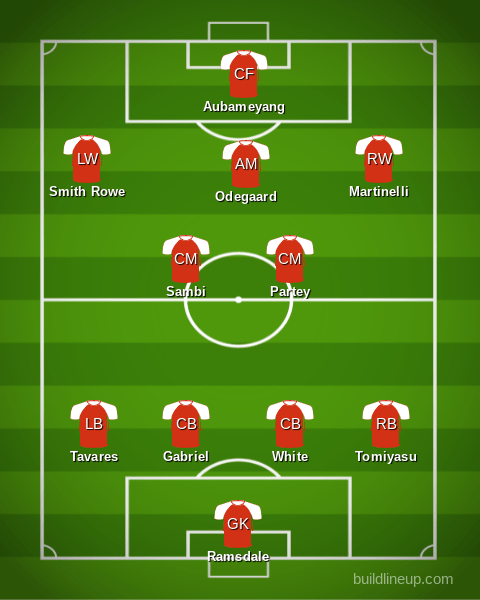
Image source: The Short Fuse - SB Nation
How Arsenal’s Tactical Setup Evolved with Zubimendi and Hincapié
By January 2026, Mikel Arteta had successfully transitioned Arsenal into a more fluid, yet defensively secure, unit. The integration of Martin Zubimendi as the primary "number 6" was a significant advancement in Arsenal's tactical geometry. Previously, Declan Rice had shouldered much of the defensive burden in the pivot, but Zubimendi’s arrival allowed Rice to operate as a roaming "number 8," utilizing his ball-carrying ability to transition the team from defense to attack more effectively.
The choice of Piero Hincapié at left-back was another notable decision. While Calafiori and Zinchenko offer more inverted midfield qualities, Hincapié provided a traditional defensive profile. This was specifically designed to counter the trickery and pace of Manchester United’s Amad Diallo. Hincapié’s ability to defend in one-on-one situations while maintaining a high line allowed Gabriel Magalhães to focus on the physical threat of Bryan Mbeumo.
In the forward line, the decision to start Gabriel Jesus over the prolific Viktor Gyökeres surprised some sections of the fanbase. However, as noted in Sports Illustrated's tactical preview, Jesus was rewarded for his exceptional performance against Inter Milan earlier that month. Arteta’s "reward for form" policy ensured that the Brazilian’s high-pressing energy was utilized to disrupt United’s build-up play from the back, a strategy that had proven successful in previous high-stakes fixtures.
Manchester United’s Strategy Under Michael Carrick and the Dorgu Factor
Manchester United entered the Emirates with a clear mandate: stability. Michael Carrick, serving as interim manager, had recently overseen a 2-0 victory against Manchester City, and he sought to replicate that defensive solidity. The double pivot of Casemiro and Kobbie Mainoo was central to this plan. Casemiro provided the veteran experience and screening, while Mainoo was tasked with tracking Martin Ødegaard’s late runs into the box.
The most intriguing selection in the United lineup was Patrick Dorgu. Nominally a defender or wing-back, Dorgu was deployed on the left wing. This was a "tactical cage" designed to assist Luke Shaw in doubling up on Bukayo Saka. Saka, widely regarded as one of the most dangerous wingers in the league, often thrives when isolated against a single fullback. By placing Dorgu ahead of Shaw, Carrick effectively neutralized Arsenal’s primary creative outlet for large portions of the match.
With Bryan Mbeumo leading the line, United looked to exploit Arsenal on the counter-attack. Mbeumo’s role was not that of a traditional target man but rather a mobile focal point who could drag Saliba and Gabriel out of position, creating space for Bruno Fernandes to operate in the "half-spaces." This pragmatic approach highlighted Carrick’s ability to tailor his XI to the specific threats posed by elite opposition.
Resolving the Injury Confusion Surrounding Saliba and Timber
The lead-up to the match was plagued by conflicting reports regarding player availability. Several popular tracking apps, including FotMob, had listed William Saliba and Jurriën Timber as "Unavailable" due to minor knocks sustained in training. This created significant confusion among fantasy football managers and tactical analysts alike.
| Player | Pre-Match Status | Final Outcome | Reasoning |
|---|---|---|---|
| William Saliba | Doubtful | Started | Passed late fitness test (Calf) |
| Jurriën Timber | Doubtful | Started | Cleared by medical staff on match morning |
| Matthijs de Ligt | Out | Did not travel | Long-term knee injury |
| Riccardo Calafiori | Doubtful | Bench | Managed minutes following return |
The discrepancy between sources was eventually clarified by the official club announcements. While Saliba and Timber had indeed missed a mid-week session, they were cleared following a final assessment at the Emirates. Conversely, the absence of Matthijs de Ligt was not a tactical choice but a continuation of his recovery from a long-term injury. Understanding these nuances is essential for a verified account of the match, as the presence of Saliba, in particular, fundamentally altered United’s attacking approach.
Key Matchups That Defined the 90 Minutes
The lineups set the stage for several individual battles that dictated the tempo and eventual outcome of the game. These matchups were the result of the specific personnel choices made by Arteta and Carrick.
- Bukayo Saka vs. Luke Shaw & Patrick Dorgu: This was the game’s primary tactical friction point. Carrick’s decision to double-up on Saka forced Arsenal to look for alternative routes through the middle, testing the creative burden on Ødegaard.
- Martin Ødegaard vs. Kobbie Mainoo: A battle of generations. Ødegaard’s movement between the lines was met by Mainoo’s disciplined positioning. This matchup determined which team controlled the "zone 14" area outside the penalty box.
- William Saliba vs. Bryan Mbeumo: A test of recovery pace. Mbeumo’s tendency to run in behind required Saliba to be at his most alert, especially given the Frenchman’s pre-match fitness concerns.
- Martin Zubimendi vs. Bruno Fernandes: As the new defensive anchor, Zubimendi was tasked with shadowing Fernandes. His success in limiting the Portuguese playmaker’s vision was a significant factor in Arsenal’s defensive stability.
Key Takeaways from the January 2026 Lineups
Final Thoughts
The Arsenal vs. Manchester United lineups in January 2026 provided a masterclass in tactical preparation and squad management. Here are the essential points to remember:
- Arsenal's Midfield Shift: The inclusion of Martin Zubimendi allowed Declan Rice to play a more advanced role, significantly increasing Arsenal's attacking threat.
- Carrick's Pragmatism: Manchester United's use of Patrick Dorgu as a defensive winger was a notably innovative way to counter Bukayo Saka.
- Injury Resilience: Despite pre-match rumors, Arsenal's core defensive duo of Saliba and Timber proved their fitness to start.
- Depth Advantage: Arsenal's bench, featuring Gyökeres and Eze, highlighted the gap in squad depth between the two sides at that stage of the season.
- Tactical Discipline: The Casemiro-Mainoo pivot provided United with a level of stability that few other combinations could match.
- Managerial Influence: Michael Carrick’s interim stint was defined by these specific, high-stakes tactical adjustments against top-tier opposition.
For a deeper understanding of how these lineups influenced the final months of the 2025/26 season, review the post-match heat maps and individual player performance metrics.
Frequently Asked Questions
- What time were the Arsenal vs Man Utd lineups announced?
- The official lineups were released at 15:30 GMT on January 25, 2026, exactly one hour before the scheduled 16:30 kickoff at the Emirates Stadium. This followed the standard Premier League protocol for match-day announcements.
- Why didn't Viktor Gyökeres start for Arsenal in this match?
- Mikel Arteta opted for Gabriel Jesus in the starting XI due to the Brazilian's exceptional recent form, including a standout performance against Inter Milan. Gyökeres was utilized as a high-impact substitute later in the second half.
- Who was the referee for the Arsenal vs Manchester United 2026 match?
- Craig Pawson served as the primary match official, with Paul Tierney overseeing VAR operations. The officiating team was under significant scrutiny given the high stakes of the fixture for the Premier League title race.
- Was Ruben Amorim the manager for Manchester United during this game?
- No, Michael Carrick was the interim manager for Manchester United during this specific fixture. He had taken over following a managerial change earlier in the season and remained in charge through the January period.
- Which players were unavailable for Manchester United due to injury?
- Matthijs de Ligt was the most notable absentee for United, sidelined with a long-term knee injury. Additionally, Joshua Zirkzee was unavailable for selection, limiting Carrick's options in the forward line.
- How did Martin Zubimendi's role differ from previous Arsenal midfielders?
- Zubimendi acted as a specialized "lone pivot," focusing on positional discipline and ball circulation. This differed from the previous season's setup, where Declan Rice often had to balance both defensive screening and box-to-box duties.